Running bags, hydration vests and backpacks have evolved rapidly over the last 15 years. Choosing the right bag is essential for balancing comfort, safety, hydration, nutrition, and self-sufficiency. Here we unpack how to choose the right running pack!
Since the creation of the lightweight race running vest in 2009 by Salomon in conjunction with Kilian Jornet, there has been an ever-increasing number of options and brands for trail runners to choose from. It’s the perfect way to stash essential kit, nutrition and hydration for the duration of your run and is another point where trail runners take a different direction to road runners, where the ability to be self-sufficient is a key part of this sport.
I first started to run to work around 2004, carrying all my gear in a backpack freebie. The run was only 2.5 miles each way, and if I didn’t ensure that the zip was closed on the side of the bag, I stood a reasonable chance of my clothes being strewn across the streets of East London. I tightened the shoulder straps as tight as they would go, and then tied the excess tails across my chest. The result was a vaguely functional, and only vaguely uncomfortable running pack!
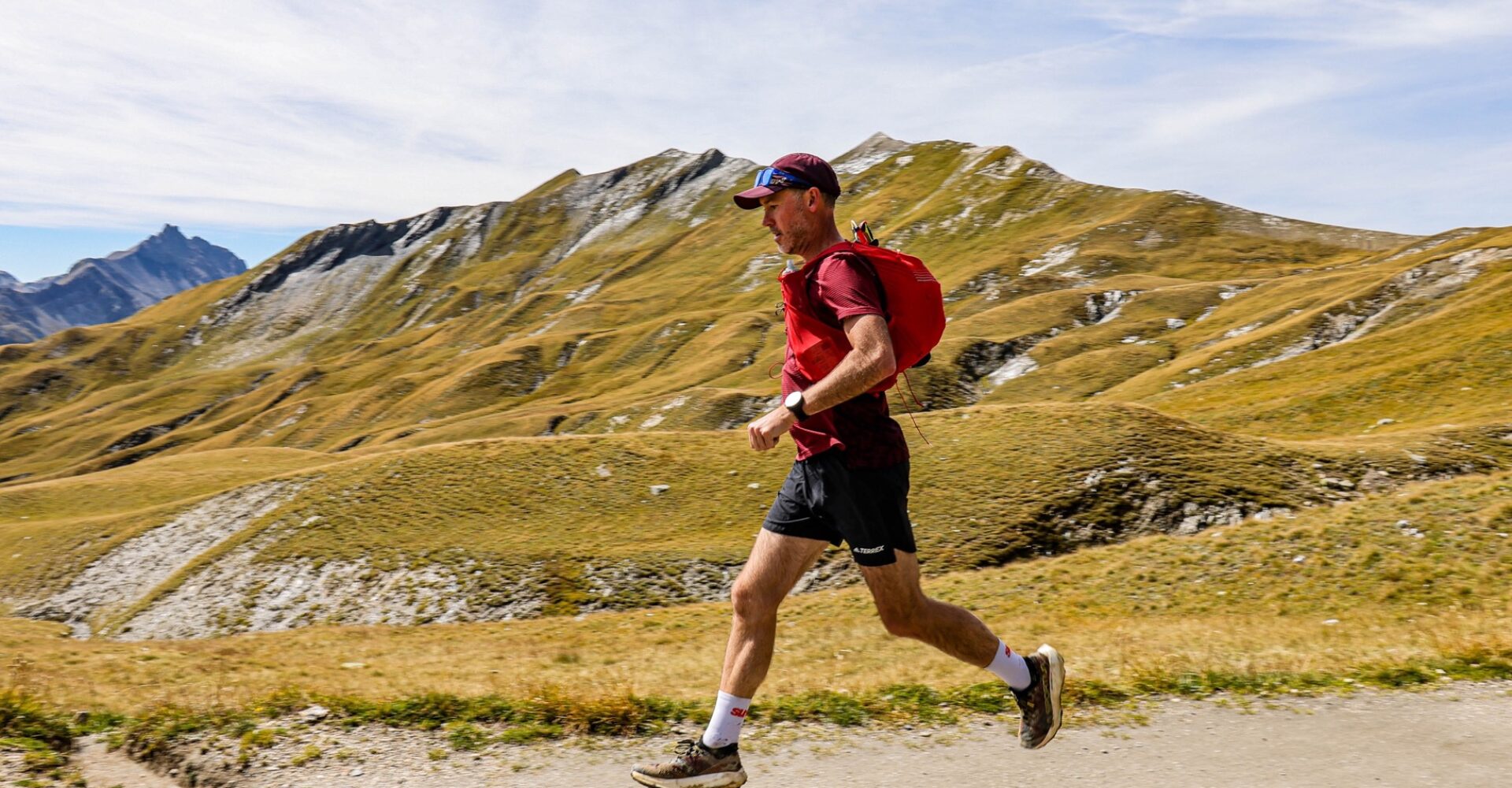
Fast forward to now and running vests are lightweight, just over 100g, have great capacity, and weight balance without the need to remove them during your run. Not all packs, vests, bags are the same though and depending on your event, there are some choices to be made. Whether you’re heading out for a short forest loop or an all-day mountain adventure, your vest determines how comfortably you can carry water, nutrition, and safety essentials. The key is to match the vest to your specific running style, distance, and environment.
Running vest, running bag or backpack?
You might have spotted there are already some confusing terms! Running (hydration) vest and running bag are usually used interchangeably, they are form fitting and bounce free and designed for running at speed. Running packs are the more traditional bag with shoulder straps attached.
Running bags hug the upper body with elastic bungee systems that hold the bag in place, or straight forwards chest clips. The vests are very comfortable, but it’s important to get the right size, gender fit and then pull tight any loose bungees to ensure the fit is snug. A vest top tends to open up your chest area more, which helps with breathing. I have a fairly long body, so prefer to have a longish pack, but I really dislike straps that tighten across my stomach. I also often run in a vest top, so must be careful about rub points around the neck and shoulder. Backpacks only work well on multistage runs and that’s because they are full of kit, but swing about more.
We also need to mention waist packs / bum bags. For some this is a preferred option, but we’d only recommend them on short distances due to their limited capacity and instability.
- Our recommended choice: running vest / running pack
What capacity does your bag need to be?
Next consideration is capacity, which is measured in litres and dictates how much gear you can carry. For short runs, up to two hours, a vest with around 2 litres of storage is usually sufficient. Middle distance runs, up to 20km or half a day often require 5–8 litres, while longer runs or ultra-distance events may require 12-15 litres and multi day stage races which require self-sufficiency even more. The goal is to carry enough without excess bulk, too large a vest can bounce and feel unstable, while too small a vest limits your ability to stay self-sufficient.
Weather, terrain, and access to aid stations all influence your needs. For example, hot climates may require more water capacity, while mountainous and winter routes might demand extra layers and safety gear. Well supported events mean you don’t need to carry as much vs if you are out there on your own! Not only that but distances will take longer to cover in more challenging environments, therefore you will need to pack more. If you are in doubt, go slightly larger, as running bags / vests unlike backpacks don’t increase significantly in weight with additional capacity.
- Our recommended choices: 5 or 8 litres and 12 litres.
Hydration systems
Hydration can be carried with in a single bladder, or via bottles, whether these be soft flask or not. Many packs have the capacity for both, but smaller packs will likely have more limited space for front held hydration. Soft flasks are now available down to 150ml size, giving you greater options to mix and match. Soft flasks have the advantage of being much more flexible in their use, for refilling or indeed varying what you fill them with, so I often run with one filled with water and the other electrolytes. In the Alps it’s great to have a soft flask spare whether you run with a bladder or not, as it’s easy to refill from a stream or water fountain. The other advantages with soft flasks are that they are easier to clean and dry out, don’t leaks so easily and are much easier to monitor your usage and similarly how much water you have left!
- Our recommended choices: soft flasks
Adjustability and Comfort
Unless you have a bag for every occasion (this is trail running, not a fashion show after all), some adjustability will be needed to reduce the movement of the bag on the body, regardless of what is packed in. Adjustable straps should be easy to use, but also easy to keep out of the way of moving body parts. There is nothing more annoying that a stray strap constantly flicking against your arm. Many packs have little areas the straps can tuck back into once tightened. Does it work well when fully packed, can you easily tighten everything on the move? High end racing vests are often the lightest bags, but often only shave off a few grams, but sometimes that adds enough comfort to outweigh the cost. Finally, ensure that you can distribute the weight evenly around the bag for added comfort and ergonomics.
Storage and Accessibility
Trail running often requires quick access to items like snacks, water, a phone, or a lightweight jacket. Look for vests with multiple front pockets for easy reach, as well as side and rear compartments for bulkier gear. Features such as zippered pockets, stretch mesh pouches, and pass-through storage (for stashing layers without removing the vest) can make a big difference during long efforts. All of which should be accessible without the need to remove the pack. Finally, if you use running poles, check for compatibility with a quiver, used for stowing. I recommend packing everything into the same places, so that when you are fatigued you know where everything instinctually.
Looking after your bag
I have found that looking after my packs also makes them last a lot longer. Gently washing your pack in warm soapy water will remove grit and sweat, meaning the mesh will last longer. For the zips, rinse them and rubbing dry soap against them will keep them running smoothly. Leave zips half open when not in use, so that if they do get stuck they are easier to get to function. If you look after it, there’s no reason why your pack can’t last for 5 years or more, and many manufacturers have a free or paid for mending service, which helps your pocket and saves the planet!
Cost
Don’t feel you have to spend a fortune. Many of the cheaper packs on the market actually offer a very good compromise. My 5-litre bag is my most frequently used pack, and not as expensive as my 12 litre which appears on longer events. If you only have one choice go for an 8-litre bag which will cover most bases. A huge amount of design alongside lightweight materials makes good running bags more costly. However, a running bag is an investment, if you enjoy wearing it, you will wear it. It will keep you warm, hydrated, fed, and help out in emergencies (what you pack in it will) and it should last a lot longer than your trail shoes!
- Our recommended choice: 8 litre if you have to choose one bag
In summary…
The best running vest is one that balances capacity, hydration, fit, and accessibility for your specific type of trail running. By focusing on these core factors, you can find a vest that enhances comfort, improves efficiency, and lets you focus on what matters most – enjoying the trail. The last thing you need to think about is the colour of your bag, but I’ll leave that to you!
Written by Karin Voller, Running Guide and Coach