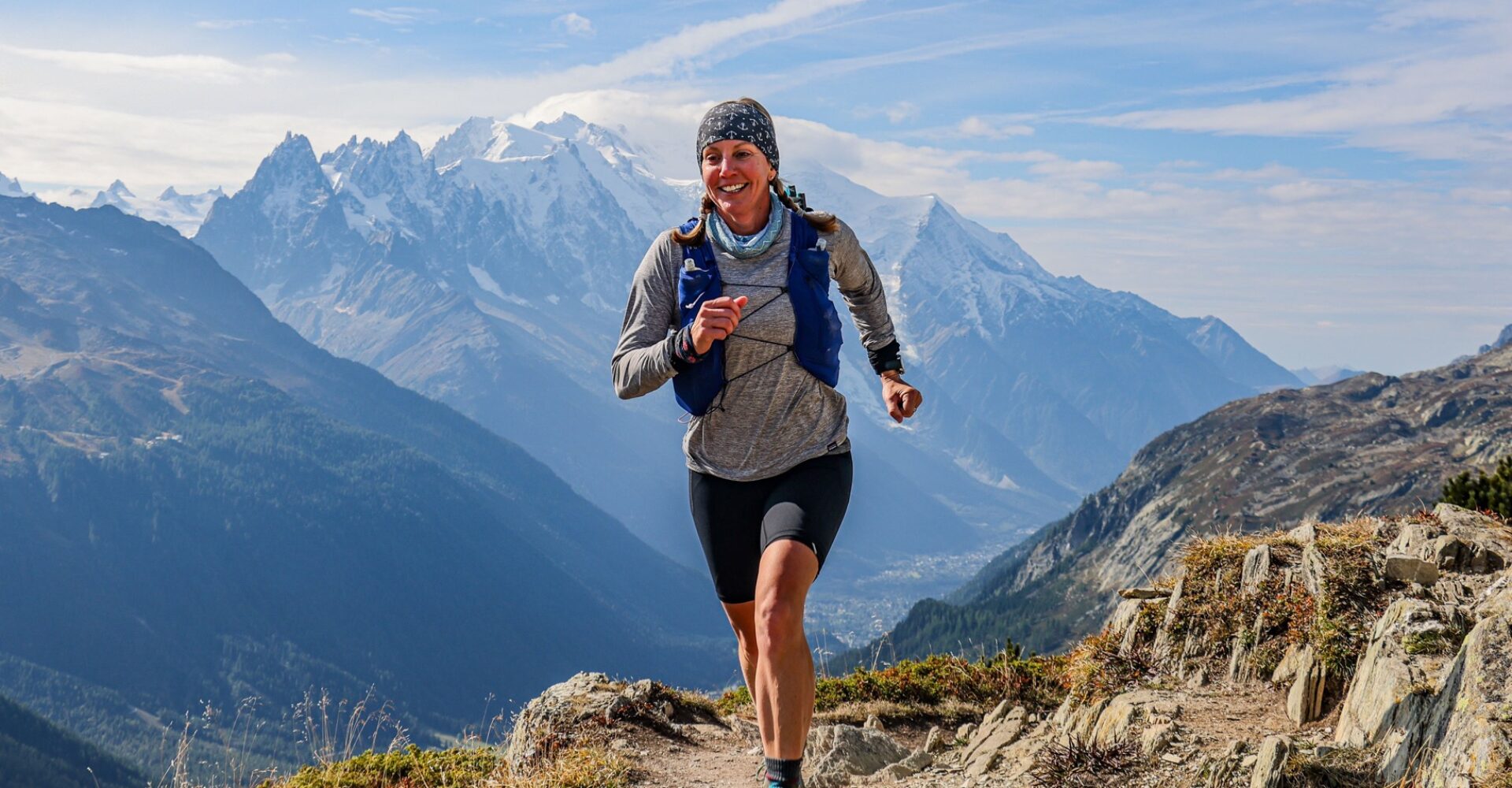
Discover the essential trail running kit for racing in Chamonix and the Alps, including shoes, waterproofs, nutrition, running poles and drop bag tips to help you stay safe, prepared and perform at your best.
If you’re heading to Chamonix for a race, packing the right kit can make the difference between a finish and a DNF. The Alps are stunning, but they’re also unpredictable. Weather can change in minutes, temperatures vary dramatically with altitude, and the terrain is far more technical than many runners are used to.
Alongside your race’s mandatory kit, here are the items we’d never head into the Alps without.
1. Trail Running Shoes
We’ll never stop saying it—trail running shoes are essential.
Mountain trails are steep, rocky and loose underfoot. A good pair of trail shoes provides the grip, stability and protection you need to move confidently and safely across alpine terrain.
2. A Waterproof Jacket
Whatever the forecast says, always carry a waterproof jacket.
The weather in the Alps can change incredibly quickly. Sunshine can become heavy rain, strong winds or even snow within a matter of minutes. Your waterproof isn’t just mandatory kit—it’s an essential safety item that could make all the difference if conditions deteriorate. Remember a waterproof is meant to keep you warm and waterproofs for mountains are not the same as one’s for Park Run.
3. Photochromic Sunglasses
One of the most underrated pieces of kit is a pair of photochromic sunglasses.
These lenses automatically adjust to changing light levels, making them perfect for racing in the Alps. You’ll move between bright, exposed ridges and shaded forest trails throughout the day, so there’s no need to keep taking them on and off.
The stronger UV at altitude also makes eye protection even more important, while the lenses help keep dust, grit and insects out of your eyes.
4. Running Poles
For the longer mountain races, running poles can be a huge advantage.
They help transfer some of the workload from your legs to your upper body, making long climbs more efficient and reducing fatigue later in the race. They also provide extra stability on steep descents and uneven ground.
Just make sure you’ve trained with them before race day—they’re only effective if you know how to use them.
5. Carry More Nutrition Than You Think You’ll Need
One of the biggest mistakes runners make is relying solely on aid stations.
Always carry enough food to get you comfortably to the next checkpoint, with a little extra in case conditions slow you down. A mix of energy gels, bars, chews and real food such as flapjacks or small sandwiches can help prevent flavour fatigue during long races.
Hydration is just as important. Carry enough water for the conditions and remember that some sections between aid stations are much longer than others. Electrolyte tablets or drink mix can also help replace the salts lost through sweating, particularly if it’s warm.
6. Make the Most of Your Drop Bag
If your race allows a drop bag, use it wisely.
Rather than filling it with random spares, pack the items you’re most likely to appreciate after many hours on your feet.
Consider including:
- Fresh socks
- Spare nutrition and favourite snacks
- Electrolyte tablets or drink mix
- Anti-chafing cream
- Blister plasters and basic foot care
- Spare headtorch batteries or a second torch (if required)
- A lightweight long-sleeved layer
- Wet wipes
- Toothbrush and toothpaste for overnight races
If the forecast is uncertain, a dry base layer can be worth its weight in gold.
7. Test Everything Before Race Day
Race day is never the time to try new shoes, clothing or nutrition.
Train with every piece of kit you’ll carry so you know it fits well, works properly and won’t cause problems after hours on the trail. Small issues become much bigger over 50, 100 or even 100 miles.
Final Thoughts
The best kit won’t replace good training, but it will help you stay safe, comfortable and efficient in the mountains. Arrive for race week with equipment you’ve tested, a well-planned nutrition strategy and a drop bag packed with purpose.
The Alps reward preparation. Pack smart, respect the mountains and you’ll be free to focus on what really matters—enjoying one of the greatest trail running experiences in the world.
Written by Run the Wild for Science in Sport
Also check out our Top Tips for Racing During UTMB Week
First published August 2026